 Live trade desk
Basics Lesson 6 of 18 · 6 min read
Long term: the part that compounds
Buckets, automatic contributions, and the few decisions that matter over 10 years.
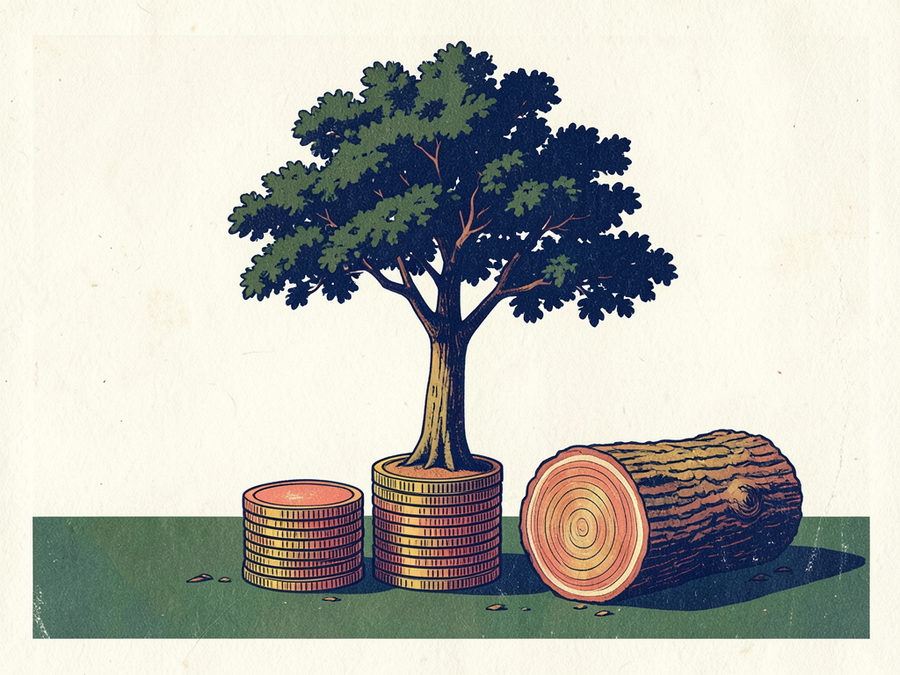
- Long-term investing is where most people build real wealth. The few decisions that matter are made in advance.
- Fill the buckets in order: a cash reserve, any employer 401(k) match, then a low-cost index fund core with small satellites.
- Automatic monthly contributions beat clever timing. Review once or twice a year, not every day.
Long-term investing is where most people's real money is made, and it is the least exciting part of this library. That is the point. The decisions are few and they are made in advance.
Buckets before tickers
Reserve. Three to six months of expenses in cash or a money market fund, a fund built to hold a steady value and pay interest. This bucket exists so you never sell investments at a bad time to pay a bill.
Tax-advantaged first. Accounts like a 401(k) or IRA cut or delay the tax on your growth. Take any employer 401(k) match in full. It is an immediate return on your money. If your employer matches 50 cents per dollar up to its cap, every $100 you put in becomes $150 on day one. Some plans make you stay a set number of years before the match is fully yours, called vesting, so read your plan's rules. The 2026 employee 401(k) limit is $24,500, with extra allowed at age 50 and up. The 2026 IRA limit is $7,500 for people under 50, shared across traditional and Roth IRAs. Roth IRAs also have income limits. Check irs.gov each year, since these figures change.
Core, then satellites. The core is a low-cost broad index fund, one fund that owns hundreds or thousands of companies. Individual stocks, sector funds and themes like AI are smaller satellites, sized so a bad one cannot sink the plan.
Why automatic beats clever
A hypothetical example: $500 a month for 20 years is 240 deposits, or $120,000 of your own money. At an 8% average annual return, compounded monthly, it grows to about $294,500. The other $174,500 is compounding, growth earned on earlier growth. Real returns vary year to year, and some years are negative. Investing can lose money, especially over short stretches. That is exactly why the contribution is automatic rather than decided each month.
What to review, and how often
Once or twice a year, rebalance back to your target mix. If you aim for 80% stock funds and 20% bond funds and stocks have grown to 88%, move money until you are back at 80/20. Also raise contributions when income rises, and check fees. A fund charging 1% a year instead of 0.03% can cost thousands over 20 years, as the ETF lesson shows. Checking prices daily is a trading habit. It does not help this bucket, and it tempts you to move money between clocks, which is the first mistake in this library.
Try this
Log in to your 401(k) or brokerage account and find three numbers: your contribution rate, your employer match, and the expense ratio (yearly fee) of your largest fund. Write them on one line with today's date. If your contributions are not automatic yet, find the page where you would set that up and read it.
Education only. Not personal investment advice. Examples use round numbers for clarity; check current prices, fees and rules before acting.